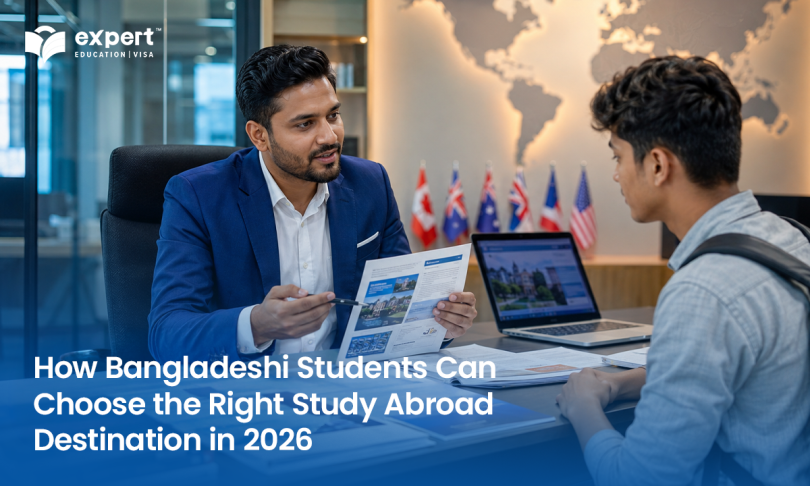

You have the grades and the ambition. Now comes the hardest part: picking the country that truly fits your life, your goals, and your family’s budget.
The Question That Keeps Bangladeshi Students Up at Night
Every year, thousands of Bangladeshi students reach the same point. They know they want to study abroad, yet the moment they start planning, the process begins to feel confusing and overwhelming.
Which country?
Can the family afford it? What if the visa is rejected?
What documents are needed and when exactly is the deadline?
The questions pile up all at once, while advice from every direction rarely makes things clearer. Somewhere in the middle of all that noise, a student is expected to make a decision that can shape the next chapter of their life.
The real problem is not a lack of information. It is having too much of the wrong kind.
What students and families truly need is a clear, honest comparison based on tuition fees, visa requirements, course availability, living expenses, and long-term career goals.
That is why a growing number of families are now seeking proper study abroad guidance in Bangladesh rather than relying on advice that shifts depending on who is in the room.
Why the Right Country Matters More Than Ever in 2026
The study abroad environment in 2026 looks very different from just a few years ago, and students still planning on old assumptions are stepping into a landscape that has changed drastically.
Australia has tightened its student visa conditions, and Bangladesh holds Evidence Level 3 status, the highest scrutiny tier, requiring three to six months of verifiable bank statements alongside a carefully written Genuine Student response.
Canada’s processing times have stretched, and refusal rates for Bangladeshi applicants have risen in certain provinces. The UK remains one of the most respected destinations in the world, though its tuition and living costs are among the highest of any option.
Meanwhile, Malaysia has moved from being a backup choice to a genuinely smart one. It offers internationally accredited universities, English-medium programs, costs well below Western countries, a manageable visa process, and universities like SEGi that offer merit-based scholarships of up to 50 percent for the first year.
For students where budget is a real concern, exploring the full picture of study in Malaysia from Bangladesh, including tuition ranges, intake windows, and visa steps, can completely change how the decision looks.
New Zealand and the USA remain strong for certain fields, though both come with higher costs and more competitive admissions.
What Should Drive the Decision
The right destination should be measured against factors that genuinely determine whether a student can afford the journey, secure admission, and build a realistic future after graduation.
- Tuition Fees: Australia ranges from BDT 21 to 37 lakh annually at more affordable universities. Malaysia can cost as little as BDT 4 to 6 lakh per year. So, know the real figure before committing.
- Living Costs: Lower tuition does not guarantee affordability. Adelaide is 16 percent cheaper than Sydney, outside London costs far less than the capital, Saskatchewan is more affordable than Ontario, Dunedin costs less than Auckland, and Texas is considerably cheaper than New York. The city chosen within a country can matter almost as much as the country itself.
- Visa Requirements: Australia requires AUD 29,710 for living costs plus AUD 2,000 for travel on top of tuition. The UK requires GBP 1,529 per month in London or GBP 1,171 outside, held for 28 consecutive days. Canada requires CAD 20,635 annually alongside tuition. The USA expects six months of bank statements with a clear funding source.
- Course Availability: Confirm the specific course is available at a recognised institution before anything else.
- University Rankings: Country reputation and institution quality are two different things. A well-accredited Malaysian university can serve a student far better than a poorly ranked institution in a more famous country.
- Scholarship Options: Australia Awards covers full tuition, airfare, an AUD 5,000 establishment allowance, and an AUD 2,400 monthly stipend. Malaysian universities like SEGi offer merit-based reductions of up to 50 percent based on SSC and HSC results.
- Post-Study Career Goals: Australia offers two to four years of post-study work rights with regional extensions, and limits students to 48 hours of work per fortnight during semesters. The UK Graduate Route gives two years, dropping to 18 months from 2027. Canada attracts students for PR pathways, though non-SDS approval rates sit at 50 to 60 percent. Malaysia suits those prioritising a faster, more affordable degree.
- Family Budget: A realistic Australian annual budget sits closer to AUD 35,000 rather than the official visa minimum. Canada requires CAD 20,635 for living costs alongside tuition. The UK mandates up to GBP 1,529 per month in London. Malaysia remains the most budget-friendly option overall.
- Intake Deadlines: Australia runs February and July intakes with some November options. The UK and Canada both run January, May, and September. Malaysia offers more flexible intakes across the year. Missing any deadline by even a week can mean a delay of six to twelve months.
Study Abroad Mistakes That Can Create Big Problems
Most setbacks start with missing information or delayed planning, not bad luck. By the time students realise it, the deadline has passed or the visa file is already under strain.
- Choosing based on trends: Popularity without fit is an expensive distraction.
- Leaving visa requirements too late: For countries like Australia, where Bangladeshi applicants face the highest scrutiny, treating the visa as the final step can seriously damage an application.
- Missing deadlines: A missed intake means waiting another six to twelve months.
- Weak financial documents: Inconsistent bank statements or unconvincing sponsor letters are among the most common grounds for refusal.
- Skipping eligibility checks: SSC results, IELTS scores, and academic background must always be verified before submitting any application.
- Starting too late: The full process typically takes six to twelve months from start to visa approval.
The Right Support Changes the Whole Experience
Students who want structured support with country selection, course matching, admission planning, and visa preparation can explore resources offered by Expert Education Bangladesh, a consultancy that has guided Bangladeshi students across destinations including the UK, Malaysia, Australia, Canada, and New Zealand.
Good guidance gives the student and family the clarity and accurate information they need to choose with real confidence.
The Best Decision Starts with the Right Questions
There is no single perfect country for every Bangladeshi student. There is only the one that honestly fits their goals, budget, course, and future plans. The students who succeed are not always the ones with the highest grades. They are the ones who started early, planned carefully, and chose based on research rather than following what everyone else was doing.
In 2026, the opportunities are real, the scholarships exist, and the visa pathways are open. What separates those who move forward from those who stay stuck is simply preparation that begins early enough. The right destination is not the most talked-about one. It is the one chosen with clear expectations, honest planning, and a solid approach behind it. So, if you’re ready to take the first step, why not contact the expert counselors at Expert Education today and start planning your future?